Tool 01
PERMAH
The Flourish App
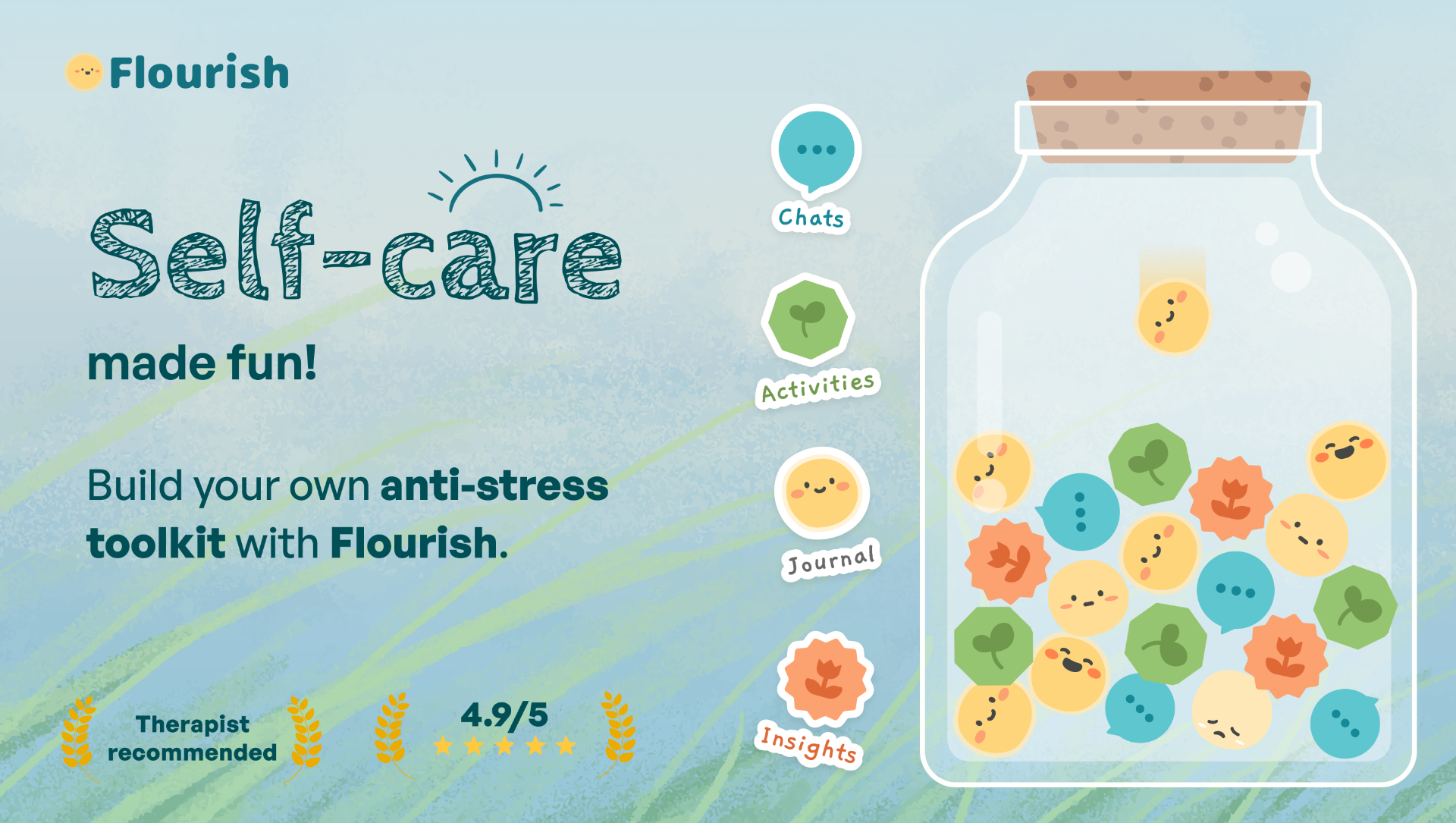
Your all-in-one, science-based well-being companion. Chats, activities, journaling, and insights — build your own anti-stress toolkit. Free for the entire UCNJ community — students, staff, and faculty.

A pocket toolkit — print the worksheets, try the timer, spread the love.
This interactive webpage introduces practical, science-based tools — developed by Flourish Science and free to the UCNJ community — to help you boost well-being and prevent burnout in your work as peer wellness educators. Grounded in research from affective science, positive psychology, and behavioral science, you'll learn simple, actionable strategies you can use right away—for yourself, your fellow peer educators, and the students you support.
PERMAH is a scientific framework for well-being and flourishing: Positive Emotion, Engagement, Relationships, Meaning, Accomplishment, and Health. Each tool below targets one or more of these pillars. Keep an eye out for those letters!
Your all-in-one, science-based well-being companion. Chats, activities, journaling, and insights — build your own anti-stress toolkit. Free for the entire UCNJ community — students, staff, and faculty.
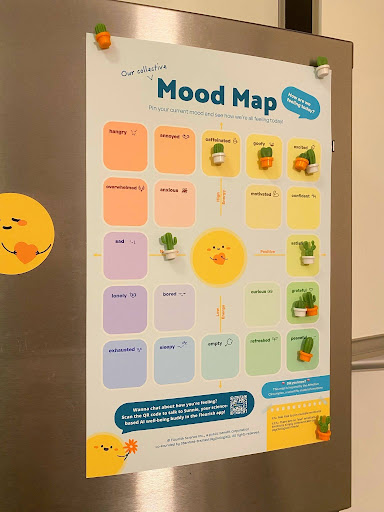
Emotions are messengers for our needs. Discover a fun, interactive way to check in with yourself, loved ones, or your community. Drop a pin on how you're feeling, see how others are doing, and start meaningful conversations.
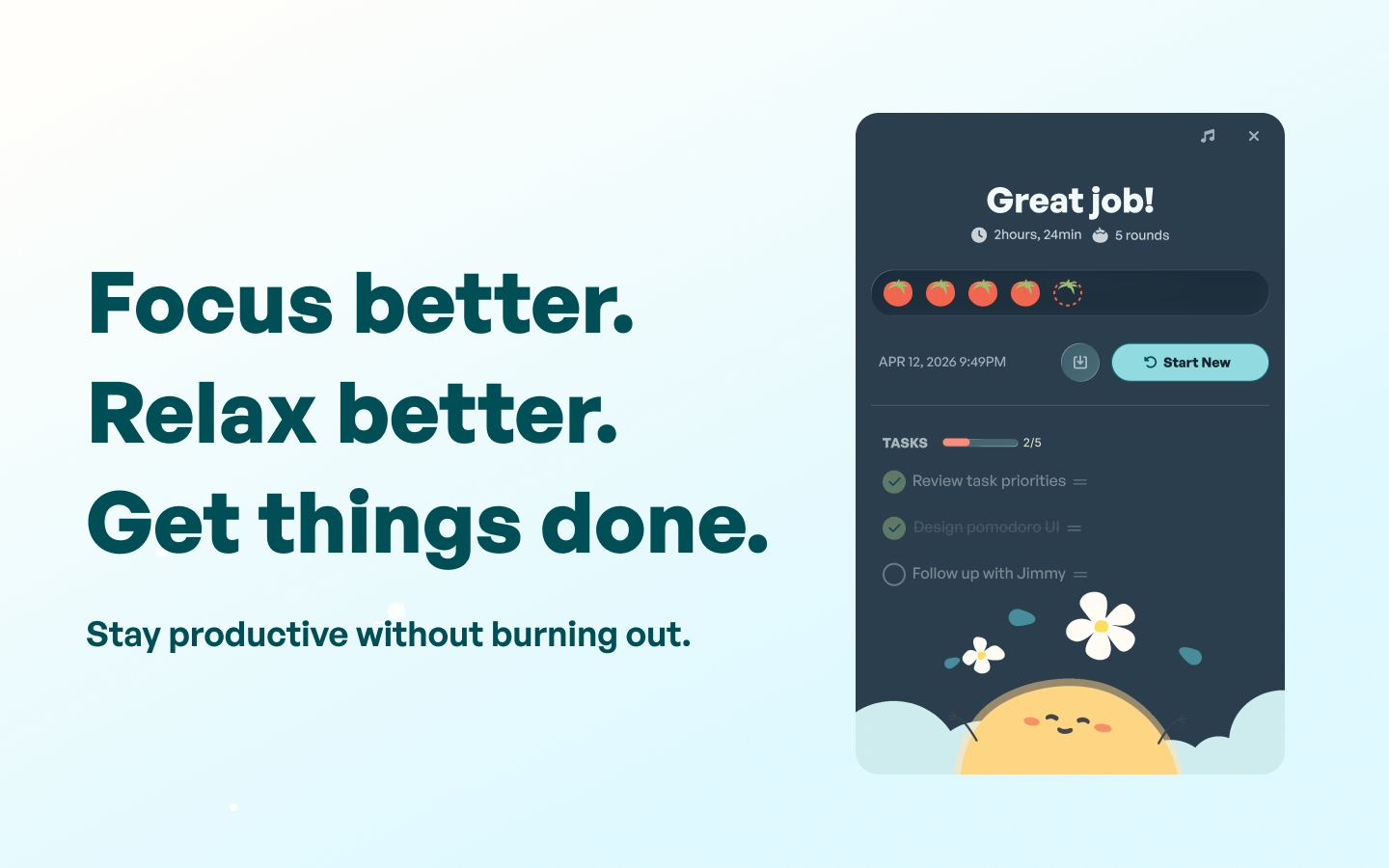
A Pomodoro Timer paired with a daily planner for your To-Do List and Done List. Work in deep, intentional sprints, then actually rest. Celebrate your progress at the end of the day. Stay productive without burning out.
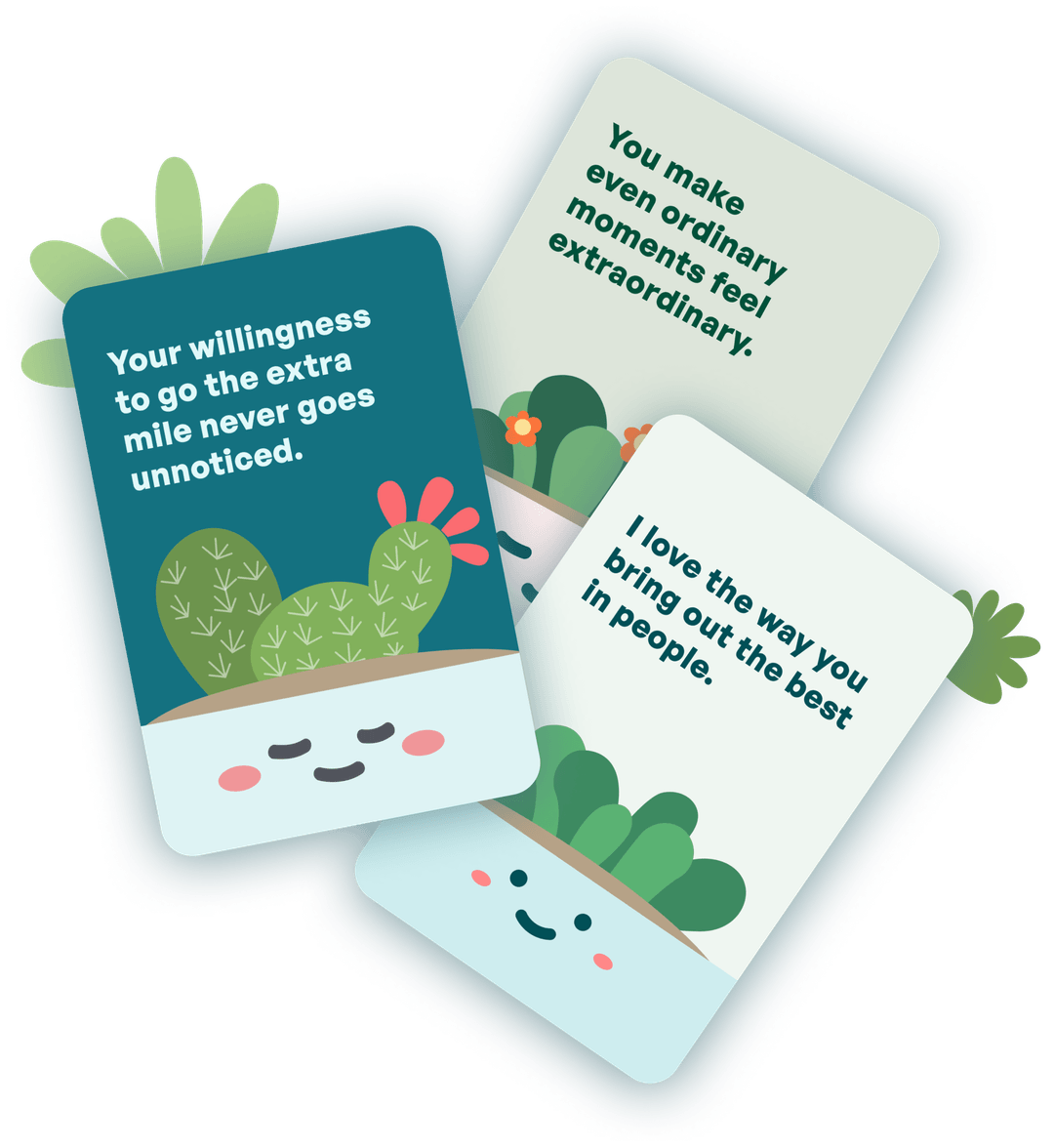
A deck of warm, specific compliments designed to strengthen connection. Pull one for a friend, a teammate, or yourself — small words, real impact. Read the science in:
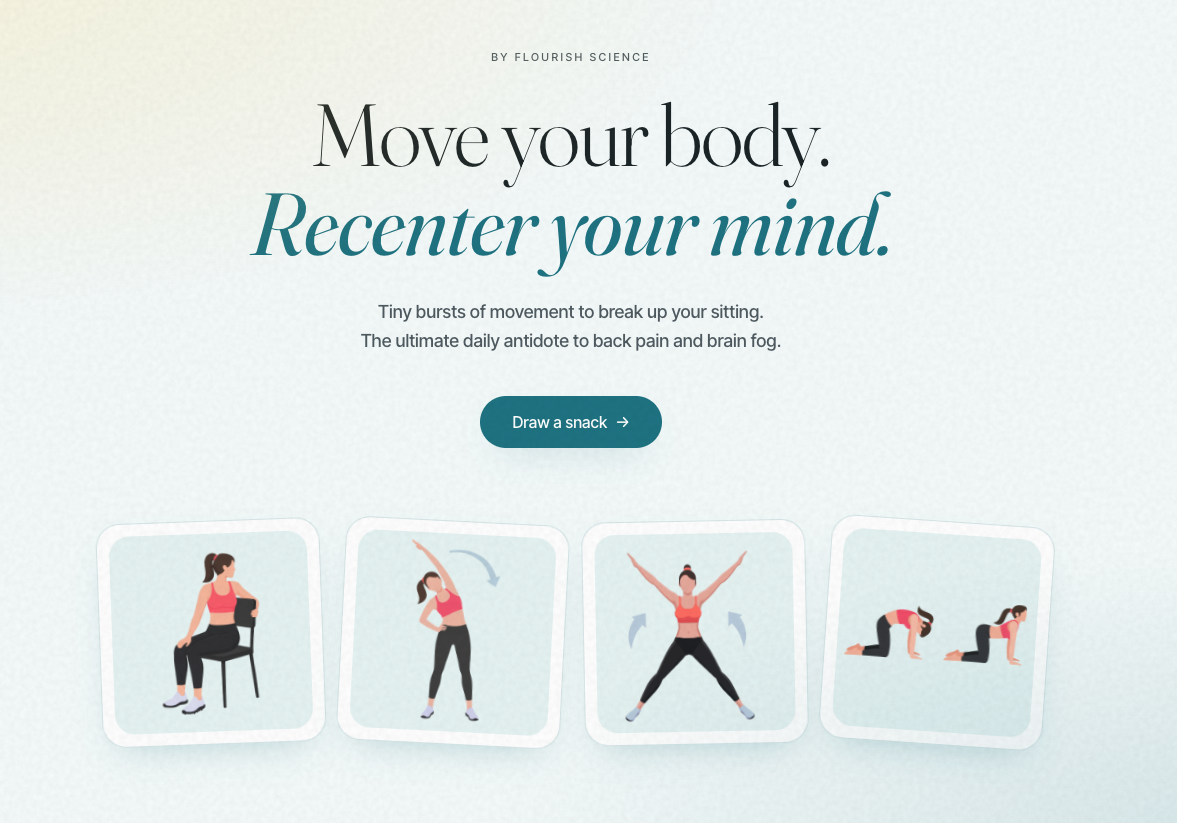
Tiny bursts of movement to break up your sitting. The ultimate daily antidote to back pain and brain fog. Move your body, recenter your mind.
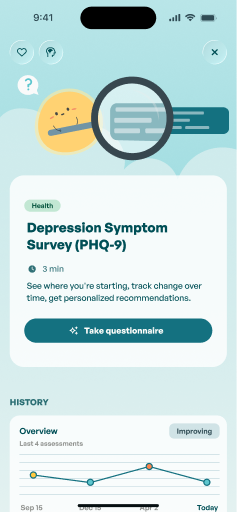
Validated mental health check-ins built right into the Flourish app. The PHQ-9 (depression) and GAD-7 (anxiety) screeners take about 3 minutes each and help you track how you're really doing over time, spot patterns early, and know when to reach out for more support.
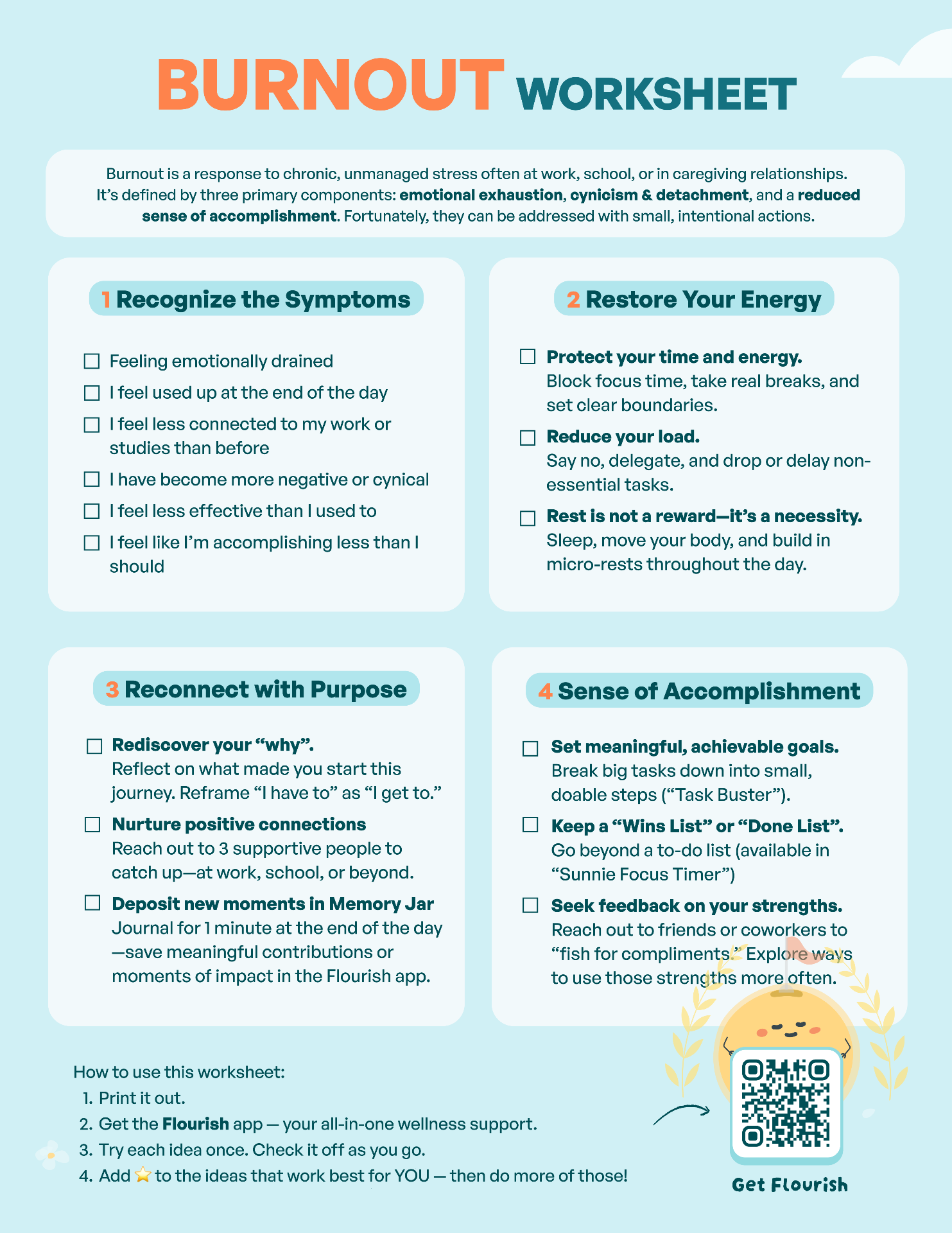
Recognize the symptoms, restore your energy, reconnect with purpose, and rebuild a sense of accomplishment — a four-part toolkit you can print and check off.
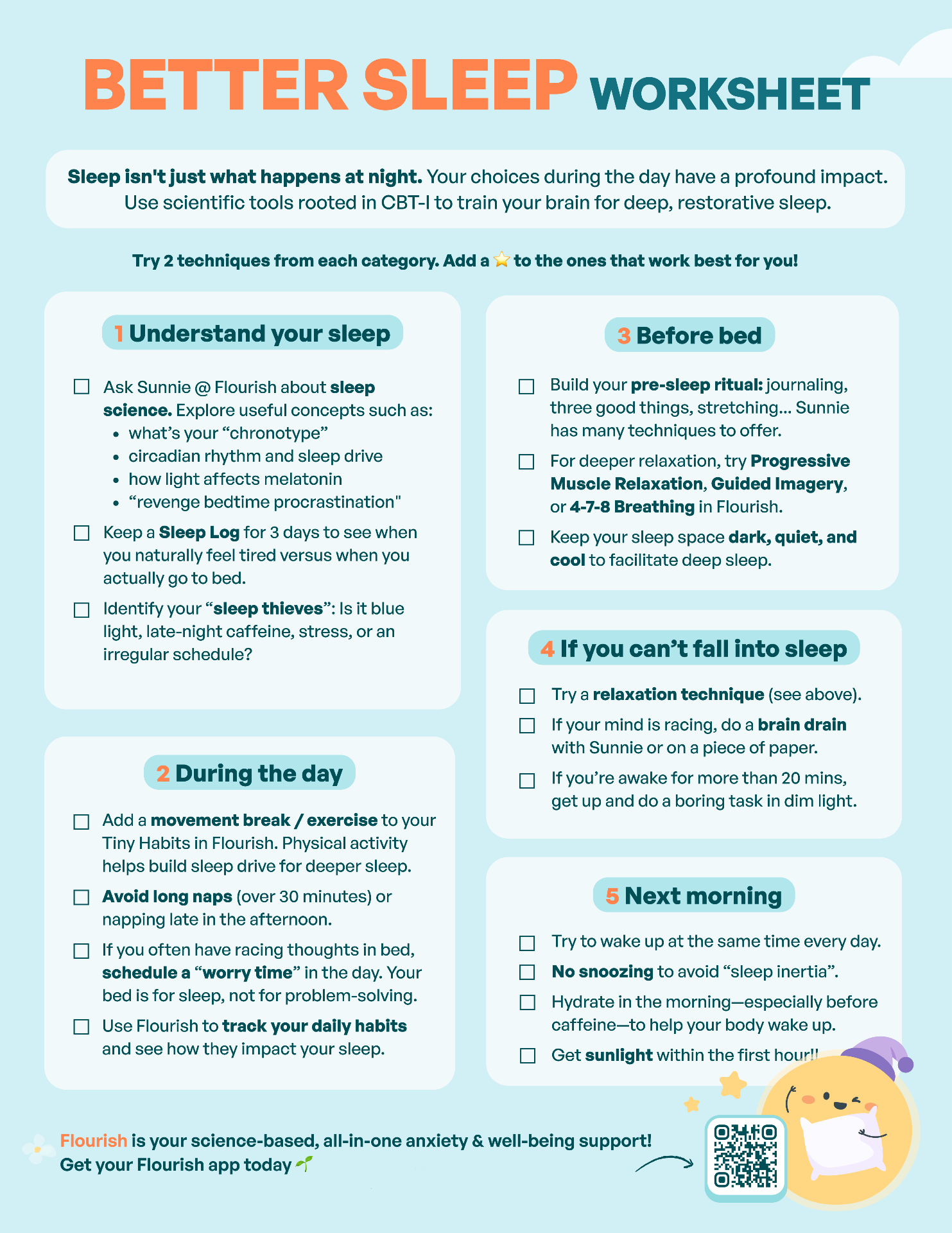
Train your brain for deep, restorative sleep with Cognitive Behavioral Therapy for Insomnia (CBT-I)-rooted techniques across the whole day — from morning sunlight to your pre-sleep ritual.
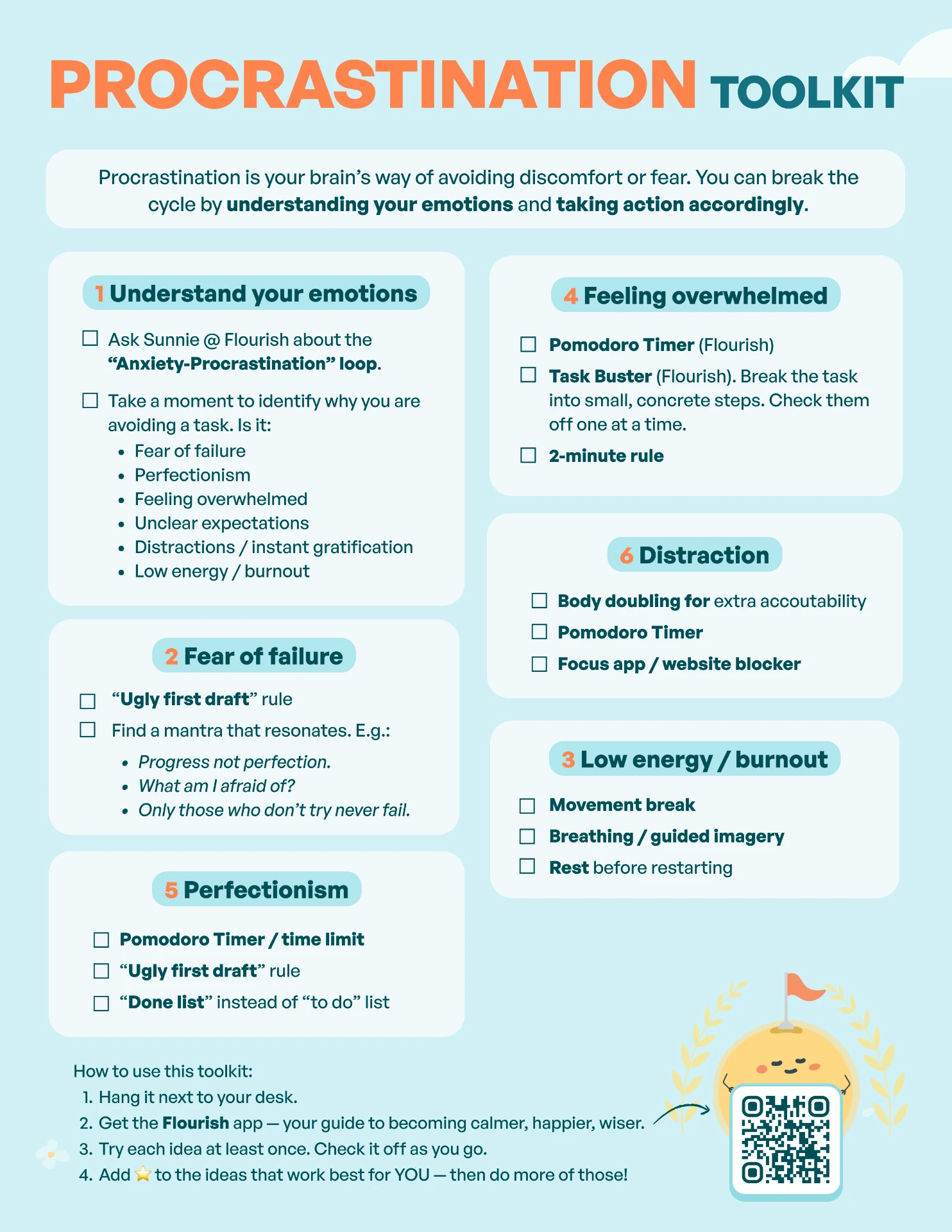
Procrastination is your brain's way of avoiding discomfort or fear. Name the emotion behind the avoidance — fear of failure, perfectionism, overwhelm, low energy, distraction — then use the matching strategy to get moving again.
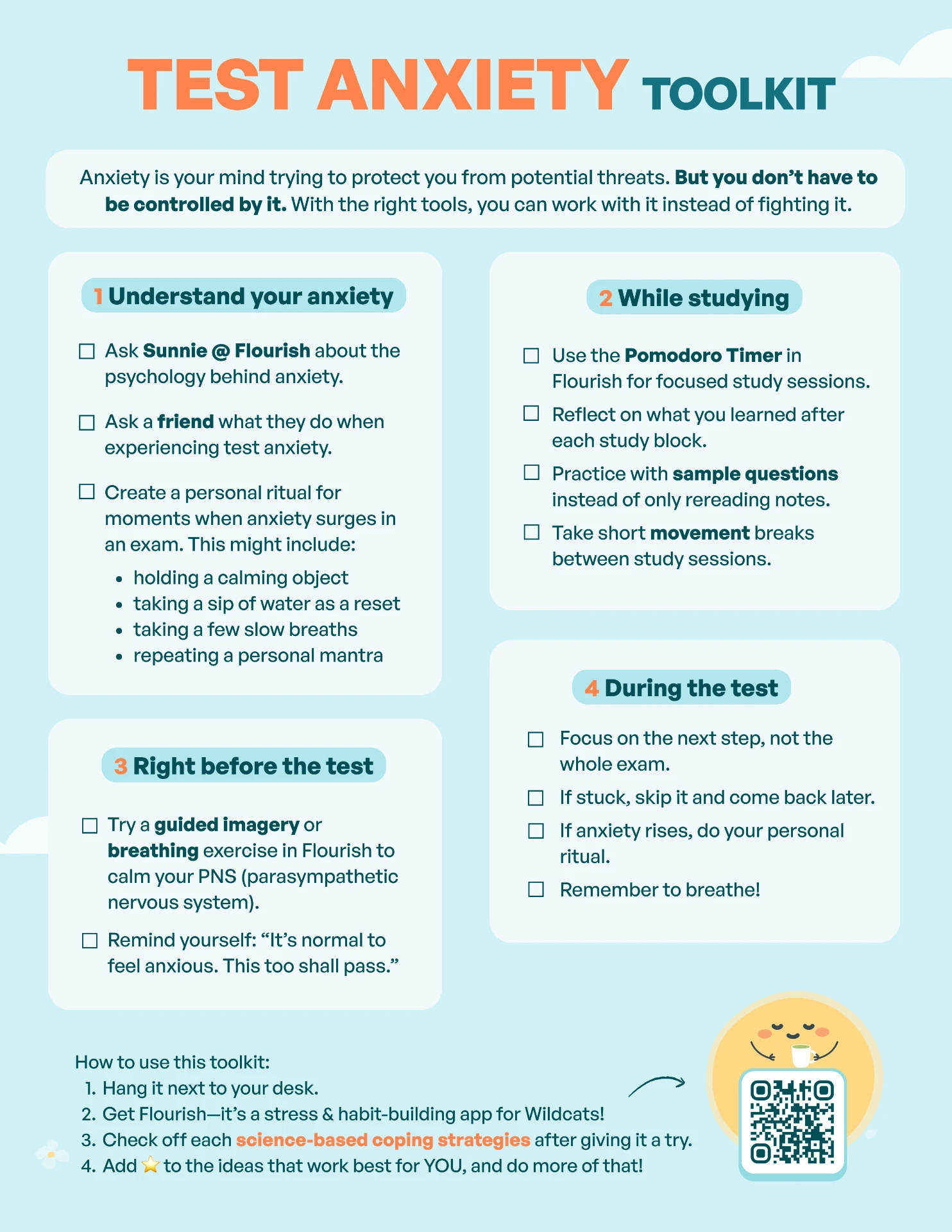
Anxiety is your mind trying to protect you from potential threats — but you don't have to be controlled by it. Understand it, study smarter, calm your nervous system before the test, and stay steady during it.
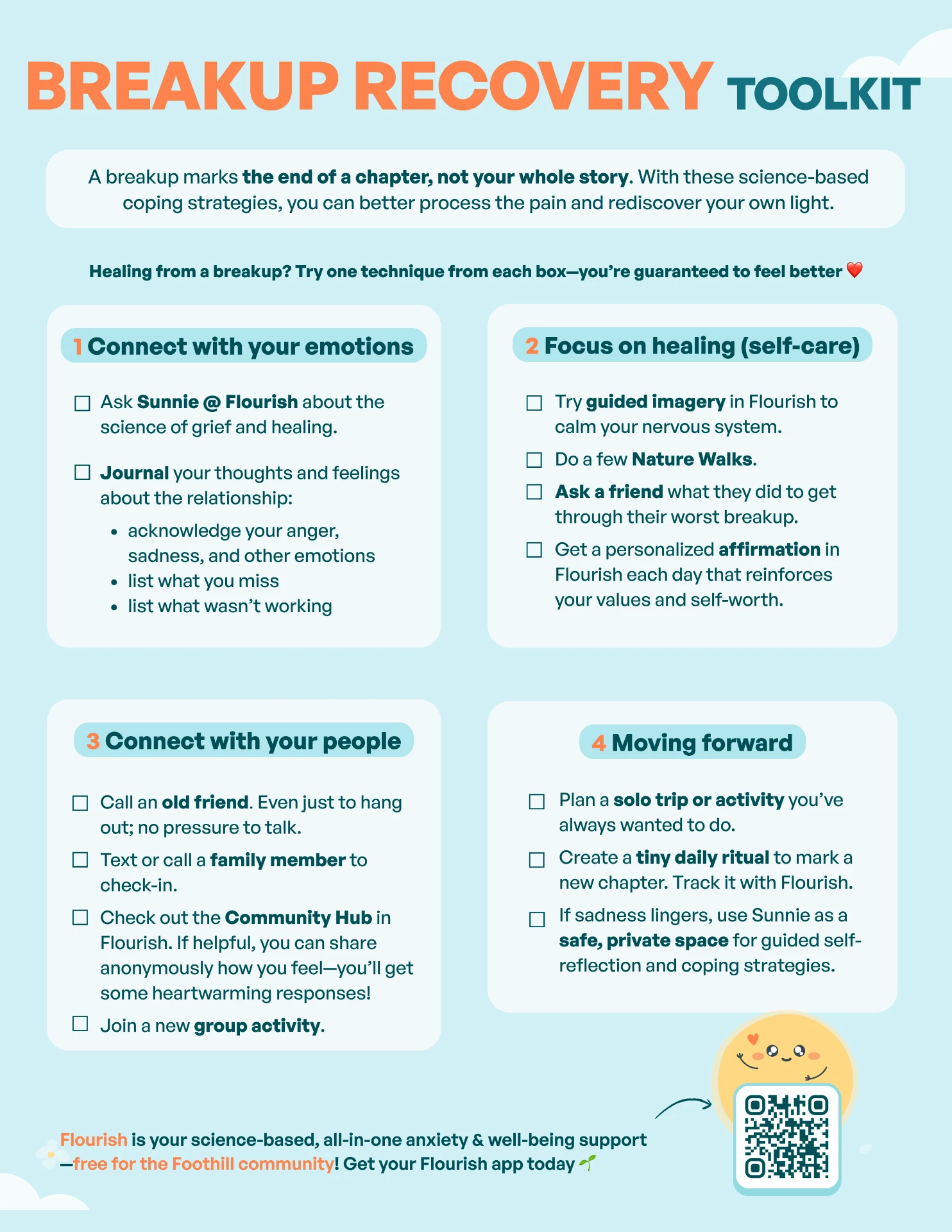
A breakup marks the end of a chapter, not your whole story. Connect with your emotions, focus on healing, lean on your people, and take small steps forward with science-based coping strategies.
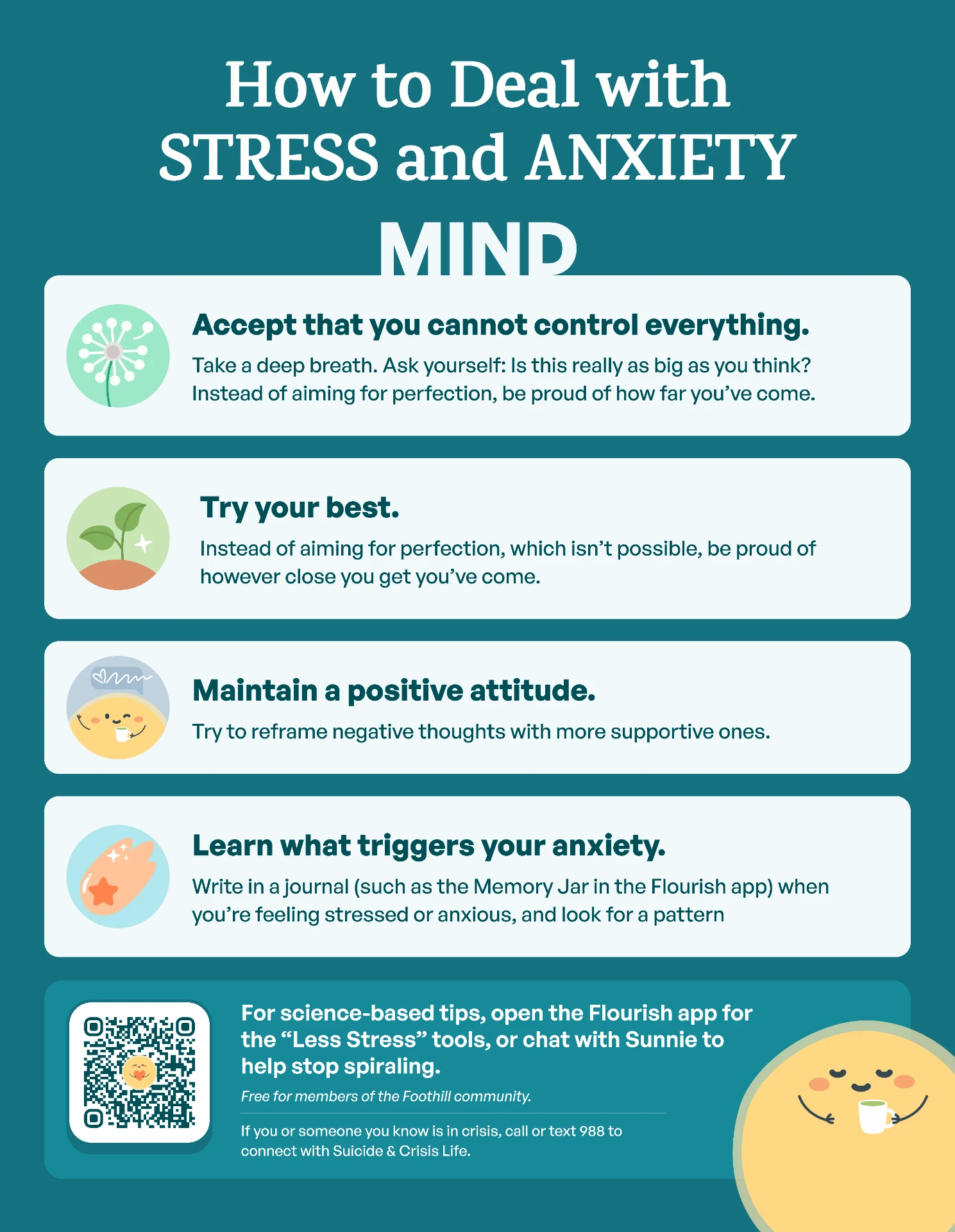
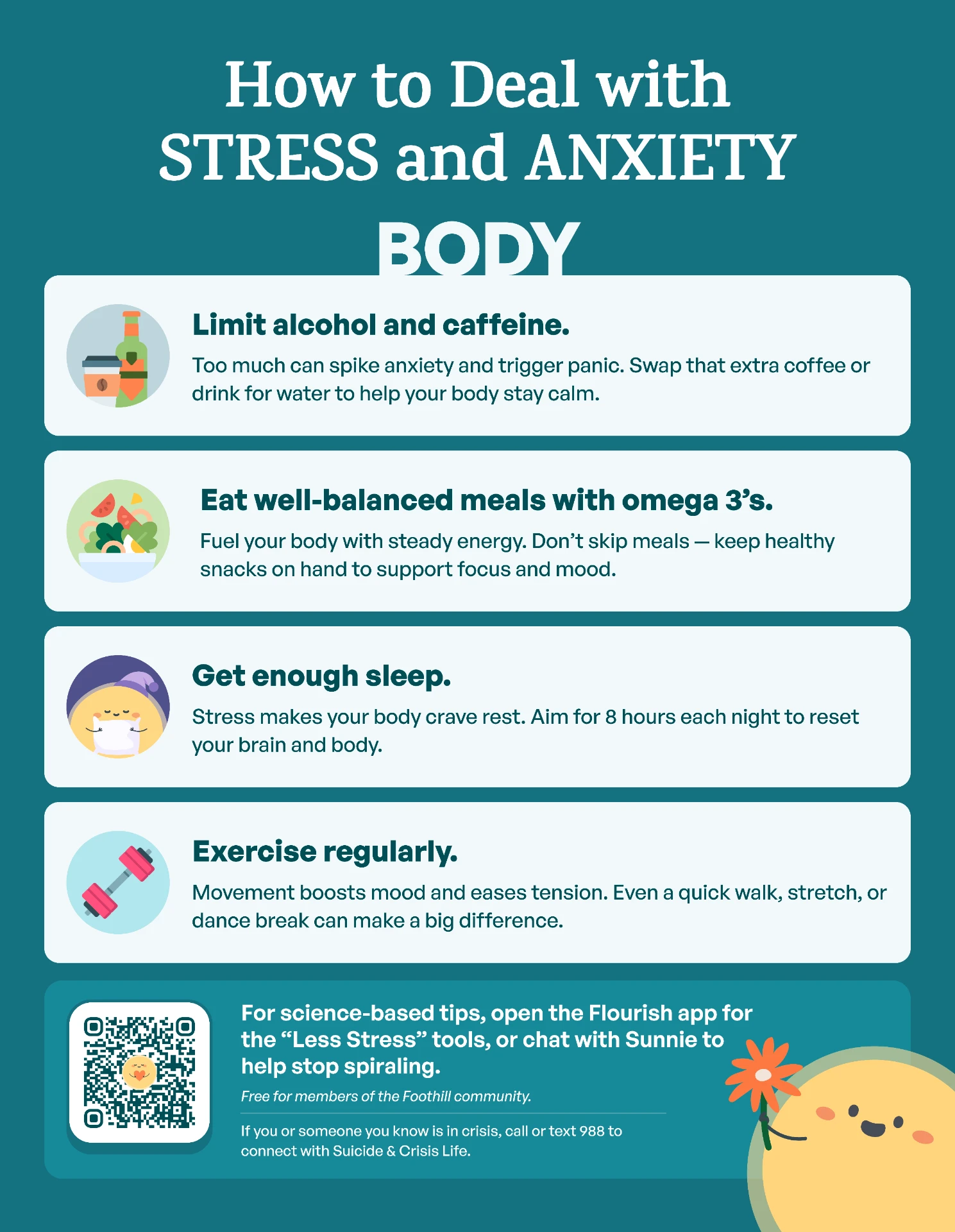
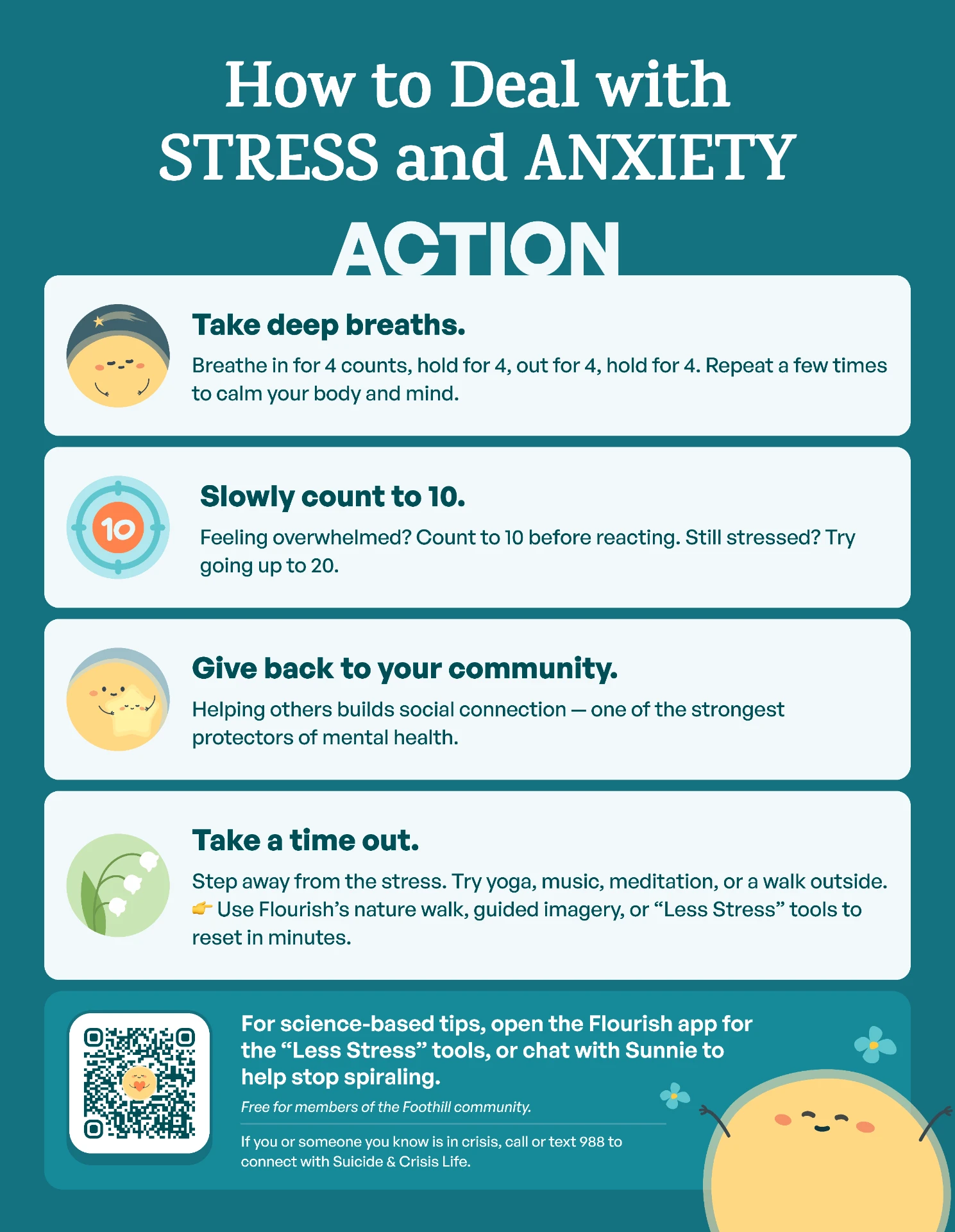
A three-part psychoeducation set on how stress and anxiety show up — and what to do about it. Mind: accept what you can't control and learn your triggers. Body: sleep, movement, food, and caffeine. Action: breathing, counting, connection, and time-outs.